New research shows swifts would rather keep their home than their partner
30/6/2026

Little Green Space is a non-profit project sharing solutions to the nature and climate crises, and offering inspiration for a greener lifestyle. If you like our content, please help keep us going with a small donation!
Ads/Affiliate links
New research by the RSPB confirms that swifts, a much-loved bird often heralded as the “sound of summer” with their screaming calls, really are loyal to their nesting site with nine out of ten individuals returning to the same nest every year.
Scientists studied 190 different swifts from 243 nests over 15 years and found that 94% of swifts reused the same nesting site as the previous year, but only 59% of nesting attempts were with the same partner.
Swifts are one of the UK's most threatened species, declining by 70% over the last 30 years, so this research reinforces why protecting their nesting sites and providing suitable new ones is a vital part of helping recovery of the species.
Researchers collected data from swifts breeding in nest boxes in and around a Dartmoor village. Breeding swifts were identified by uniquely numbered leg rings which enabled scientists to track which birds bred together and which nest box each swift nested in every year. Data was collected from 243 nests during this period.
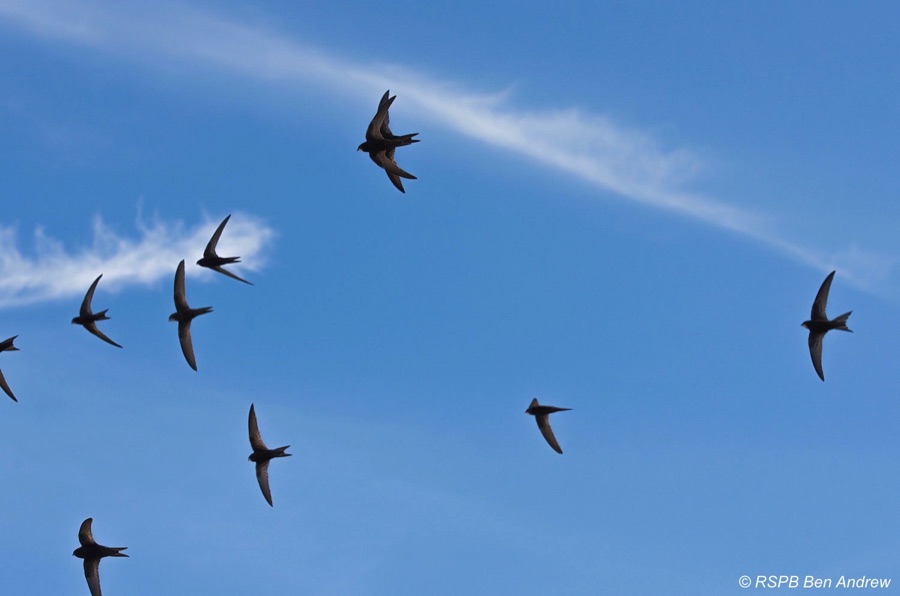
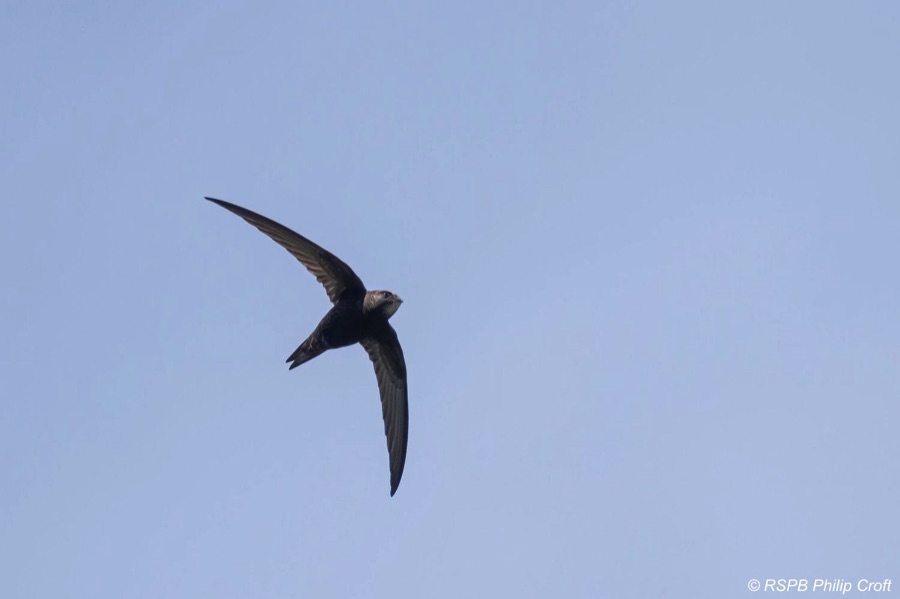
Swifts are a familiar sight in many of our villages, towns and cities, nesting in the eaves of buildings and identifiable by their scream-like calls. Their scythe shaped wings mean they are capable of incredibly efficient flight, spending their whole lives eating, sleeping and mating on the wing. Each spring after wintering in Africa these birds migrate 3,400 miles to the UK, and it has been widely believed they returned to the same nest sites.
Historically, swifts have made use of small crevices and holes in buildings to raise their chicks, but new building methods have left them increasingly few spaces for nesting. The species has declined by 70% (1995-2024) in the UK, likely due to loss of nest sites and availability of insects.
Many swifts return from their long migration to find their traditional nest site blocked or gone entirely, forcing these birds to expend extra energy and time searching for an alternative – but new nest sites can be hard to find.
Providing specially designed nest boxes or swift bricks is becoming increasingly important – but the fitting of swift boxes or bricks to new buildings is still not compulsory, and is only encouraged by planning policy rather than required by law.
All too many new houses and other buildings still fail to provide them. This must change, alongside stronger controls and penalties to prevent the demolition of buildings while swifts are nesting in them, if these birds are to be guaranteed the much-needed supply of alternative new homes that they increasingly need.
Malcolm Burgess, RSPB Principal Conservation Scientist, said: “We've anecdotally thought for a long time that swifts are loyal, returning to the same nesting sites and partners each spring. But for the first time we've documented just how strongly faithful they are to their nest sites, which highlights just how important it is to protect their nesting sites in our neighbourhoods. The decline in swift numbers is a great cause for concern and without increasing the availability of nest sites, and replacing those that are being lost, we will see further declines of this extraordinary bird in our towns and cities.”
Using the same nest site year after year means birds become familiar with the local area and find food more efficiently, and they attract other swifts to nest within the same colonies. Where Swift nest sites were lost during the study, scientists observed that the swifts were forced to move colony.
This year Scotland became the first UK country to make installation of swift bricks – bricks designed to provide an ideal space for swifts to nest in – a legal requirement for new buildings, to help safeguard the future of this threatened species.
Despite much campaigning, the rest of the UK still falls short of this simple measure. It is clear from this new research that if swifts continue to lose the nest sites they return to each year and not enough suitable new nest sites are made available, they will eventually be lost from our skies.
Carl Bunnage, Head of Nature Policy (RSPB England), said: “Recent changes to planning policy made by the Westminster Government to more strongly encourage developers to fit swift bricks to new buildings are a small step in the right direction. However, they fall far short of what is needed if we are to halt and reverse the decline in our swifts. The fitting of swift bricks in accordance with the relevant British Standard wherever possible should be a legal requirement. Tighter controls are also needed on the demolition of buildings where swifts are, or may be, nesting, alongside more resources for the stronger enforcement of the Wildlife and Countryside Act 1981 where nests are illegally disturbed or destroyed. Swifts need us to act, and now.”