
A place for change:
rewilding the River Test
Rewilding along rivers can go hand-in-hand with recreational activities – creating authentic experiences, while boosting biodiversity. By Charlie Flowers
I wish I could start this by saying I parked up in the shade of the thousand-year-old oak tree, but since the wind was up and dragging grey clouds across the May sky, that wouldn't be true. Instead, when I arrived at the Oakley fishing beat, I hid in my car and waited for the weather to ease, the oak filling my rear-view mirror. A leveret sat in the wet grass in front of me, hiding also, and staring back through my window. It finally startled when the car door slammed shut, darting under the locked gate and off along the banks of the River Test.
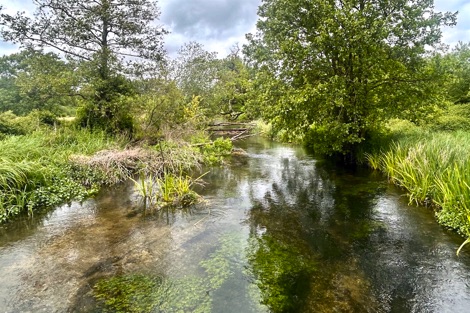
Walking through the gate myself, I know the river is there somewhere. I can hear it, scent it even, the air is crisp with nearby running water, but I just can't see it. The grasses and reeds burst up from the water's edge high above my eye-line, and everywhere I look is green. Ahead, a willow waves its long, reaching arms in invitation to keep walking. Damsel flies and mayflies dart around my feet with each step.
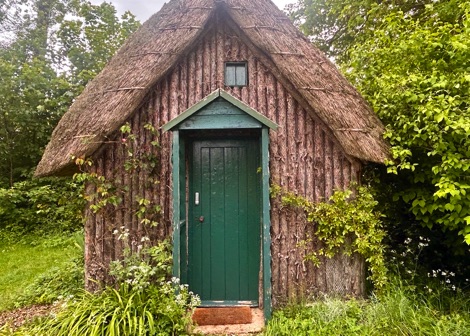
The thatched roof reveals itself first, mossy and weathered. Then a shoebox-sized window, which is annoyingly off-centre. Finally, the small porch and full visage of the fishing hut come into view. The walls are made of thin vertically placed logs shaped to fit beneath the roof. It reminds me of the cakes my mum would make out of chocolate fingers as a kid. The finer details are painted green, and the surrounding trees and grasses keep up their attempt to conceal it.
This little, modest hut has a mythical status. When F.M Halford was pioneering dry-fly fishing in the late 1800s, this hut was his workshop, and the Oakley beat his testing ground. He is considered the father of the modern technique, and even though I've never been an angler, I still feel the weight of his legacy here. The Test may not be the Test we know, had it not been for Halford's innovations.
With the fish ready and waiting, the biggest physical barrier to a decent day's catching is the flora of the river. Trees, alive and overhead, or felled and in the river, are unnecessary obstacles and threaten to tangle the line. The rushes, reeds and grasses that edge the banks can restrict access to the water, and the lush green weeds that carpet the riverbed make for too good a hiding spot. So, it all has to go. Or at least as much as pleases the anglers.
The banks are mown into neat strips of lawn, with the majority of the vegetation cut away. Logs and branches in the water, that would ordinarily provide shelter, perches, and movement to the ecosystem, are removed, and the banks are reinforced with sandbags, wooden boards or sheets of corrugated iron. Taking away the obstacles and edges canalises the flow and makes the river run in a straight, predictable way.
Whilst this is great for the angler, and the stocked fish don't know any different, conservationists would say that removing habitats and manipulating species populations have a damaging effect on the ecosystem as a whole.
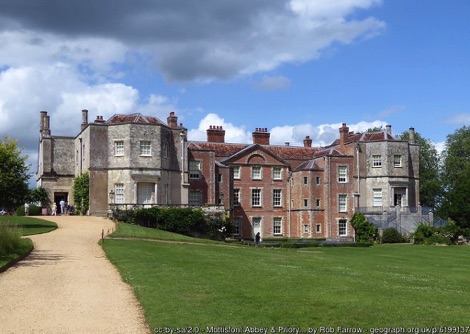
The Oakley Beat once looked a lot like this, but when the contract for its management was being renewed in 2023, its owners saw an opportunity. The National Trust, which took on the nearby Mottisfont estate in 1957 (including the Test on either side of it), wanted to try something and launched a proposal to rewild the rivers in their charge.
Whilst this wasn't met with unanimous applause from other local river keepers, several organisations showed interest and applied for the right to carry it forward. Wessex Rivers Trust eventually won the bid, liked the plan, and got to work.
I round a bend in the path, the hut is long out of sight now, and the tree cover has opened up above me. What little sunlight there is hangs off the ripples on the water's surface. A mother drifts calmly against the current, followed by her four ducklings paddling for their lives. A massive, felled ash tree lies across the river, next to the stump that once held it up.
In the last few years, the National Trust have given agency back to the Test, and put trust back into the environment.
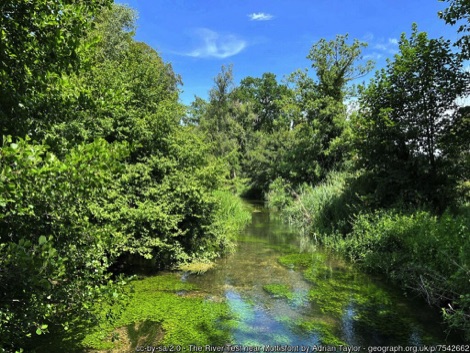
The banks up and down the Oakley are wild and busy, with just small inlets here and there for fishers to stand. It's hard to tell which gaps were cut by human tools, and which were smoothed by otter bellies.
The path of a river itself is not an easy thing to change, but within the confines of the bank, the shape of the river can be diversified. Large logs, or a buildup of weeds, cause tension in the calm flow, riffling and rippling the water around them. This provides extra living spaces and extra oxygen in the water, promoting animal life.
I was told by a Lead Ranger that for the first time in years, evidence of a growing water vole population acts as validation of their efforts, and a higher number of salmon redds are the crown jewels of the Oakley.
No farmed fish are stocked into this stretch of river anymore. Instead, the keepers chose to encourage natural species growth by rebuilding habitats, and those who wish to fish here are offered an authentic experience, a challenge and the potential reward of a wild Test trout. Not buying stocked fish has the added bonus of bringing down the cost of spending a day here, making a river that usually draws the elite, far more accessible to the many.
The river comes into clearer view as I pass the hut, since the path is slightly raised from the water level. Still full of foliage and left to fend, the riverbanks do a good job of creating a natural barrier between land and water. The beat stretches northward from the hut, and I follow along the path. Wet and untamed grass brushes my ankles and dampens my socks. The river always on my left, the wetland meadows and Oakley Copse on my right.
Because of Halford's significance, this part of the river has become a point of pilgrimage for fisherpeople from all over the world. To fish here is, as the Wild Trout's website says, akin to a tennis player getting on Centre Court at Wimbledon. But, in the past, this has put pressure on the fishing companies who have managed the beat, and the expectation of guests landing a catch has influenced how they look after the world of the river. It's a scenario mirrored up and down the Test.
Stocking fish is the first step. Hatcheries raise and fatten trout on farms, then release them back into the river. Whilst this has become a necessity for many companies due to species decline and economic survival, it also ensures the best chances of catching a fish. Stocked fish are less fussy. Often trained to associate movement on the water with feeding and completely lacking predatory awareness, they take the fly without prejudice and more readily.
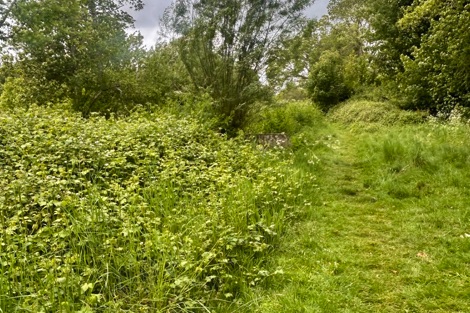
Retracing my steps back to the hut, its context catches me off guard after the wildness of the beat. I had almost forgotten the history of the place and had accepted it for something new. I walk past the hut, watching the Test slip away beneath the thicket of reeds, until it's out of sight once more.
There is definitely something magical about being here. But it isn't what I'd expected.
It's not the deep history, the weight of which has helped anchor the Test in a community much wider than its own. But rather the fact that change can happen despite the past. It would be easy for people like the National Trust, or Wessex Rivers, to fall on the side of cultural heritage. To protect what was built here regardless of the environment, and made easier still by the fact they could greatly increase the cost if they did. But that isn't what they've done. They made a place for change. They put the Test itself at the heart of their plans. The Oakley beat stands as an example of potential, of what could be. Its new existence adds to the growing conversation of river management by just being proud of itself, weeds and all.
Back through the gate, the leveret is there to greet me again. This time, however, it doesn't hang around and bounds down the gravel track, towards the thousand-year-old oak, searching for something better to look at than my car.
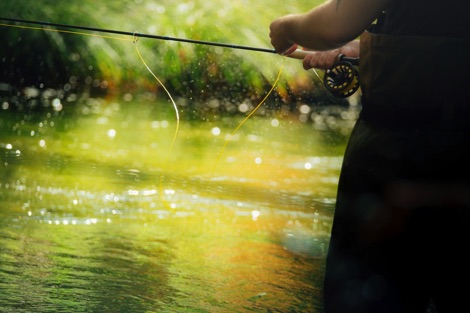
Fly fishing. Photo by Tim Foster on Unsplash
Charlie Flowers is a writer from the Test Valley, Hampshire, interested in place, people, nature and queerness. He is a Forest School leader and trig-point lover.
Little Green Space June 2026
Find Charlie on Substack at substack.com/@charlieflowers
Ads/Affiliate links

Little Green Space is a non-profit project sharing solutions to the nature and climate crises, and offering inspiration for a greener lifestyle. If you like our content, please help keep us going with a small donation!
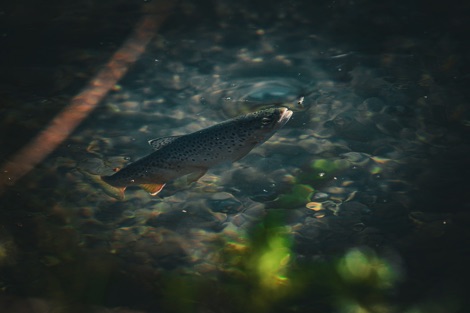
Brown trout. Photo by Jon Sailer on Unsplash