

in a heatwave
How to help bumblebees
As heatwaves become more frequent and more extreme, spare a thought for bumblebees – they find hot weather particularly challenging
The heatwaves that have been sweeping across the UK so far this year have seen daytime temperatures regularly rising to over 30C. The hottest day ever recorded for May was reported at Kew Gardens, London, where temperatures reached 35.1C; and last month was the warmest June on record for England.
The UK could see warmer-than-average temperatures for the rest of the summer, too, according to the Met Office's three-month summer outlook, released on 1 June. This long-term forecast also suggested that an increased chance of heatwaves and heat-related impacts was likely until the end of August.
Heatwaves are becoming more extreme, frequent and prolonged as a result of climate change and warming temperatures globally. The top 10 warmest years for the UK since 1884 have occurred since 2002, says the Met Office – and none of the coldest years since then have been recorded in this century.
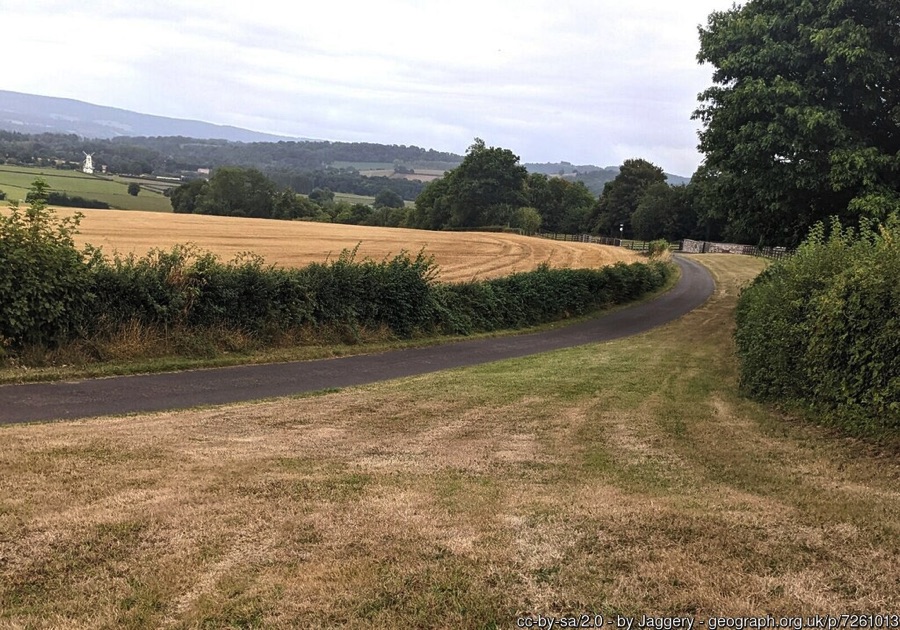
As well as causing severe challenges to us humans, prolonged spells of very hot, dry weather can cause problems for wildlife – with lack of access to water and food causing dehydration, starvation and heat exhaustion.
The risk of wildfires becomes more prominent too. Barbeques and sparks from cigarettes can cause wildfires that devastate wildlife and habitats. Litter, especially glass, also poses a risk. In national parks across the UK, barbecues or any form of open fire and flame are not permitted in open countryside. And visitors to any countryside area, park or green space should always leave no trace by taking litter away and disposing of it responsibly.
Helping bumblebees in hot weather
Many insects are in decline, including bumblebees. Research conducted in 2025 by the Bumblebee Conservation Trust showed that, of the UK's 24 bumblebee species, numbers for 15 species are below average. And even some of the most common species, the red-tailed and white-tailed bumblebees, are showing signs of gradual long-term decline.
Bumblebees are particularly at risk during hot weather, says the Bumblebee Conservation Trust – and, unlike many other insects, they actually prefer cooler weather.
This is because, around 35 million years ago, bumblebees evolved in the cool, damp conditions of the Himalayas. Bees in this region needed to adapt to a cooling climate, and so they gradually became furrier, rounder and larger – eventually becoming the fuzzy, charismatic creatures that we know today.
These adaptations made them well suited to temperate regions, and so they spread into the northern parts of Europe, Asia and America.
The UK's climate, with its mild summers, has historically been ideal for bumblebees. But when things get hot in the UK, bumblebees can really struggle. Their well-insulated bodies can overheat quickly, making flying and foraging for food very challenging. According to the Bumblebee Conservation Trust, UK bumblebee activity starts to diminish at around 28C – and when the mercury hits 32C, almost all outside activity ceases.
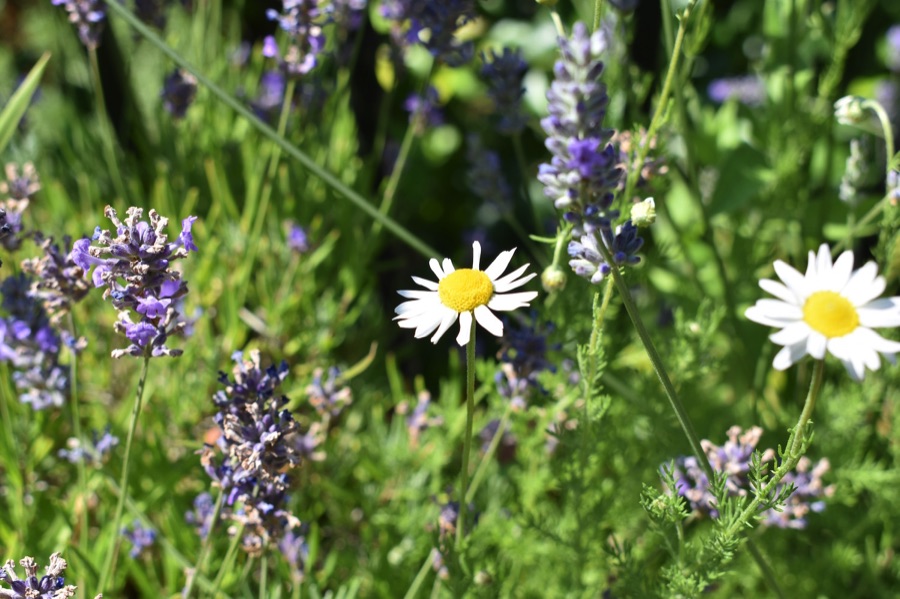
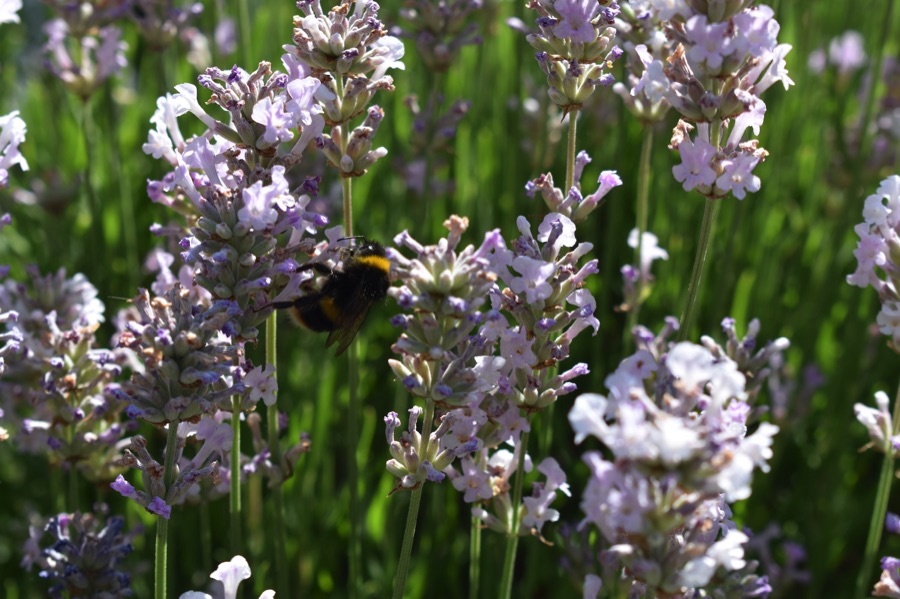
Growing herbs like lavender and chamomile can help bumblebees in hot weather
Drought places a strain on plants too, causing them to produce fewer, smaller flowers containing less nectar and pollen – making it even harder for bumblebees to find the food they need.
This means the insects are restricted to foraging early in the morning and late in the evening, when things are a bit cooler. So, to make sure that bumblebees find the food they need in those precious, limited hours, it's important that our gardens and community spaces are packed with nectar-rich plants. Comfrey, clover, chives, sunflowers, hebe, cosmos, scabious and honeysuckle are a few suggestions.
Herbs are also a good choice. And, because many herbs originate from the Mediterranean, they are able to withstand hot, dry conditions. Lavender, rosemary, thyme, chamomile, marjoram and oregano will all attract and support bumblebees.
Some bumblebee species have short tongues, and some have long tongues – and the different species will visit different-shaped flowers, to enable them to access the nectar. Open flowers, like daisies, borage and cranesbill (a native geranium; not to be confused with the brightly coloured bedding plants, pelargoniums), will attract short-tongued bumblebees.
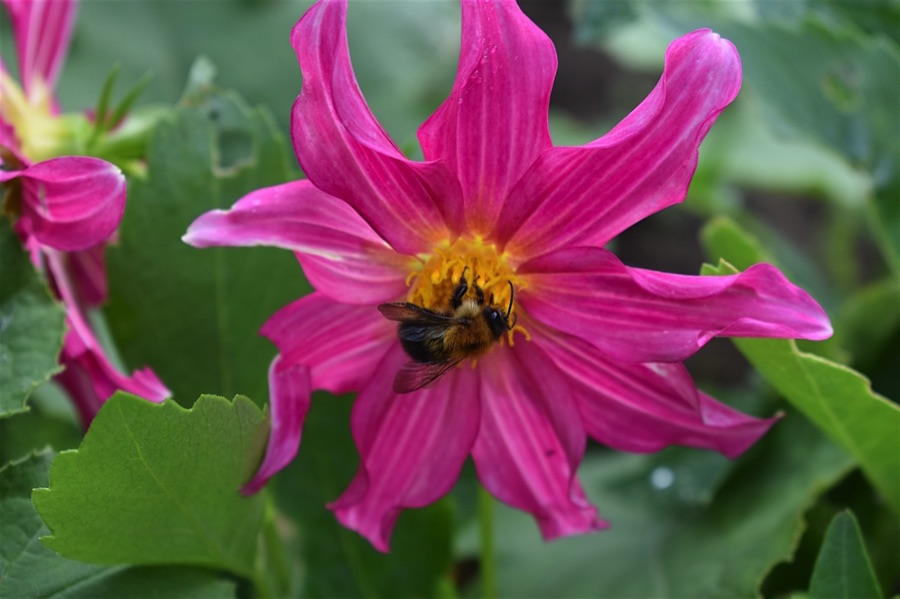
Bumblebee enjoying a single-flowered dahlia
Meanwhile, tubular flowers such as foxgloves, snapdragon and aquilegia are preferred by long-tongued bumblebees.
Showy, frilly flowers usually aren't suitable for bumblebees. These flowers often don't produce much nectar – and, because of the elaborate petals, what nectar is available is hard for the large, round insects to get to. If you're buying dahlias, for example, choose a single-flowered variety – bumblebees love them!
Bumblebees typically get all the water they need from the nectar they collect from flowers. But other pollinating insects need access to water for drinking. In drought conditions, shallow natural water sources can dry up – and insects can struggle to access deep or fast flowing water such as rivers.
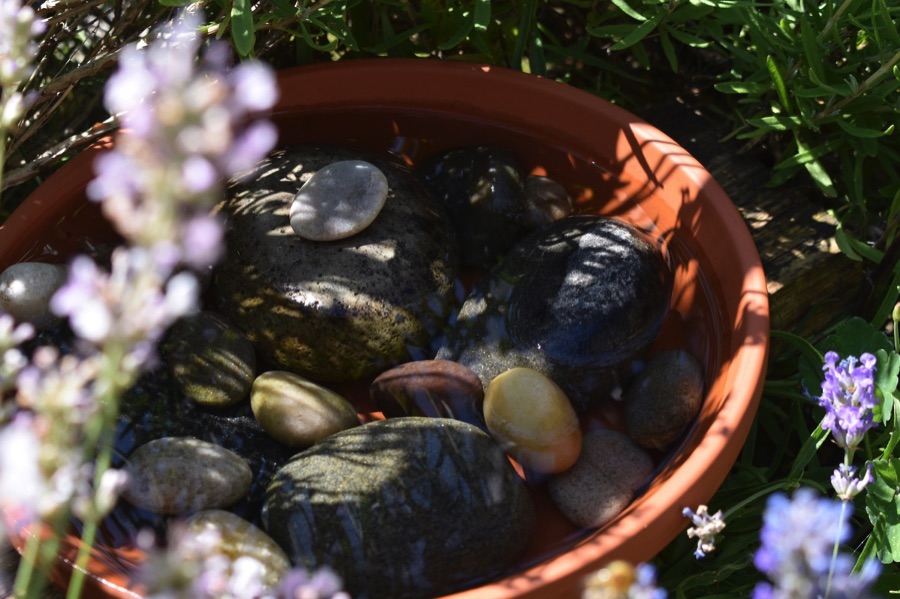
A bee bowl is a quick and simple way to provide water for insects. Arrange some different-sized pebbles in a shallow dish, such as a large plant saucer, and fill with water. Make sure that some pebbles are protruding out of the water so that insects can land and drink. Then place in a semi-shaded area – ideally near some nectar-rich plants. Refresh the water regularly, to prevent it from becoming stagnant.

Little Green Space is a non-profit project sharing solutions to the nature and climate crises, and offering inspiration for a greener lifestyle. If you like our content, please help keep us going with a small donation!
Ads/Affiliate links
Little Green Space July 2026